Selecting High-Temperature Refractory Materials: 3 Key Performance Indicators Explained
2026-02-15
Technical knowledge
This article explains three essential performance indicators for selecting refractory materials in high-temperature industrial applications: maximum service temperature (refractoriness and load-bearing behavior), durability under real operating conditions (thermal shock, corrosion/erosion, and wear), and manufacturing-process quality factors that drive consistency (raw-material control, automation, and quality assurance). Using Zhengzhou Rongsheng Refractory Materials Co., Ltd. as an example, it highlights how automated production, large-scale capacity (reported annual output of 130,000 tons), and continuous refractory innovation support stable high-temperature performance and extended lining life. Drawing on practical learnings from 2,000+ customer applications worldwide and collaborations with industry and research partners, the article emphasizes material diversity and system-level solutions to improve process stability, efficiency, and maintenance planning across furnaces, kilns, and reactors. Readers will gain a clear, engineering-oriented framework to evaluate refractory options and optimize high-temperature operations.
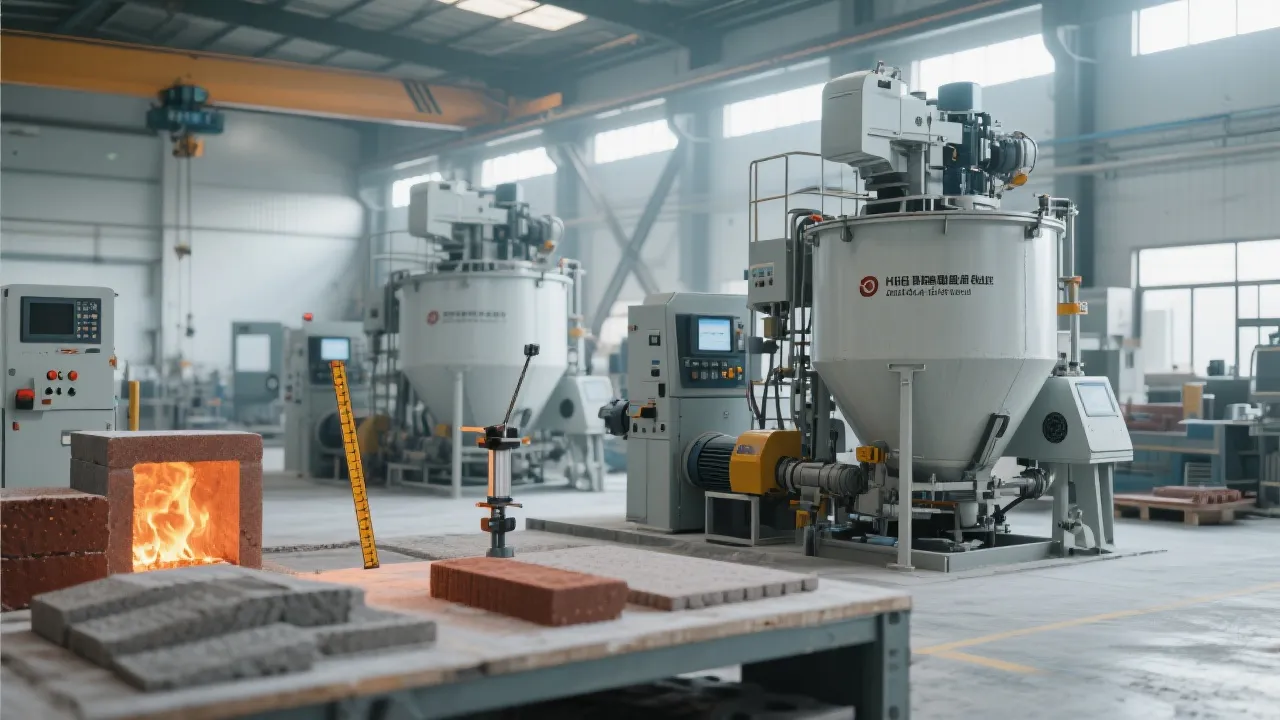
How to Choose High-Temperature Refractory Materials: 3 Technical Indicators That Prevent Costly Downtime
In high-temperature industries—steel, cement, non-ferrous metals, glass, petrochemical, incineration—refractories do far more than “withstand heat.” The right selection determines lining life, thermal efficiency, product quality stability, and how often a furnace must be shut down for repairs. This guide breaks down three technical indicators decision-makers, engineers, and procurement teams can use to evaluate refractory materials with fewer surprises in real operation.
Best for: kiln & furnace linings, burner zones, ladles, reheating furnaces, waste-to-energy units
Key outcomes: longer campaign life, lower heat loss, fewer unplanned stoppages
Indicator #1 — Refractoriness & High-Temperature Load Performance (It’s Not Just “Max Temperature”)
Many purchases fail at the first step: comparing only “maximum service temperature.” A refractory may have a high refractoriness number on paper, yet deform under load, creep at hot spots, or soften around burner impingement areas. Engineers typically look deeper into Refractoriness Under Load (RUL) and creep rate, because these correlate more reliably with lining stability in long campaigns.
What to check (practical benchmarks)
| Parameter |
Why it matters |
Common reference ranges* |
| Refractoriness (softening point) |
Baseline thermal ceiling for the composition |
≥ 1,700°C for high-alumina; ≥ 1,770°C for selected corundum-based products |
| RUL (e.g., T0.6 under specified load) |
Predicts deformation in roofs, burner zones, and high-load areas |
1,350–1,550°C depending on grade & application |
| Creep in compression (e.g., 1,400–1,500°C / 50–100h) |
Indicates long-term shape stability during campaigns |
Lower is better; many premium linings target < 0.6–1.0% under defined test conditions |
*Reference values vary by standard (e.g., ISO/ASTM) and by furnace design; they should be matched to your operating profile and mechanical load conditions.
A reliable supplier will help translate these numbers into a zone-by-zone lining design: hot face vs. backup insulation, burner throat vs. transition zones, slag line vs. barrel, and so on. In practice, the best performance often comes from a graded system, not a single “strongest” brick everywhere.
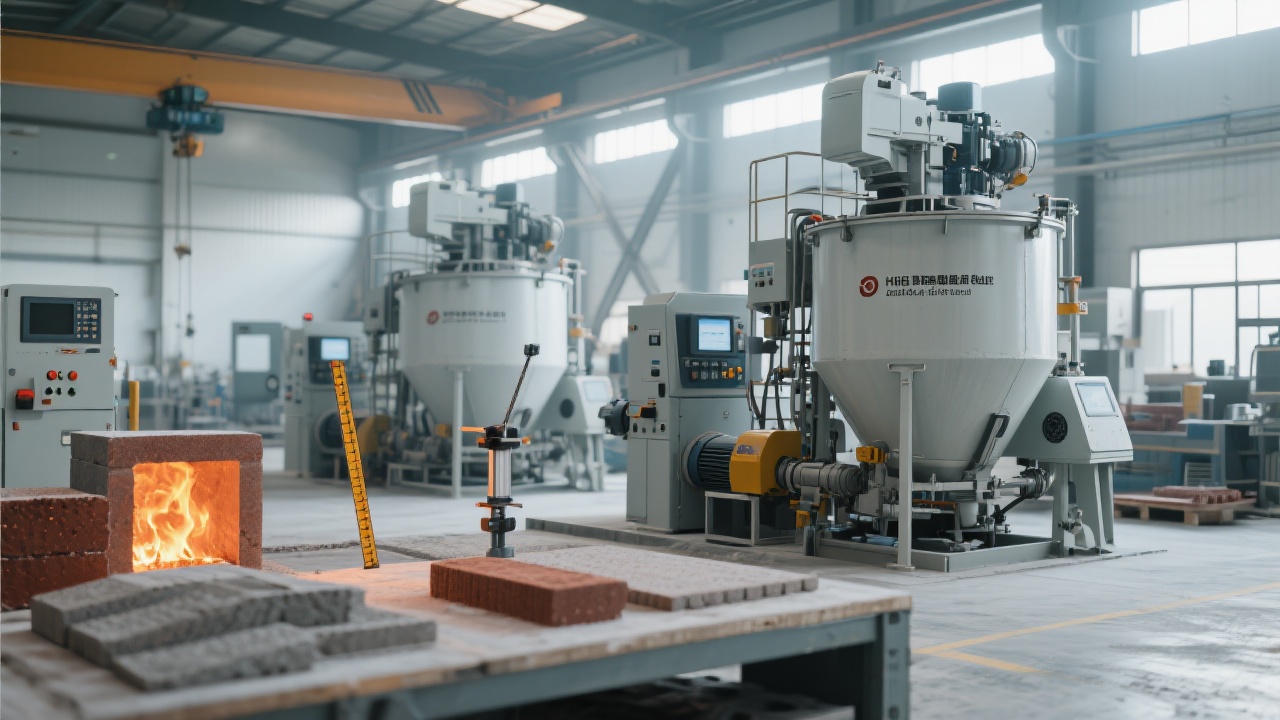
Indicator #2 — Durability: Thermal Shock, Erosion, Corrosion, and Slag Resistance
Most refractory “failures” are not a simple heat issue—they’re a wear mechanism issue. Rapid heating/cooling causes spalling; dust-laden gas flow erodes hot faces; alkali salts, slags, and volatile compounds corrode the matrix. The right selection starts with identifying the dominant wear mechanism and then matching chemistry and microstructure accordingly.
Thermal shock resistance
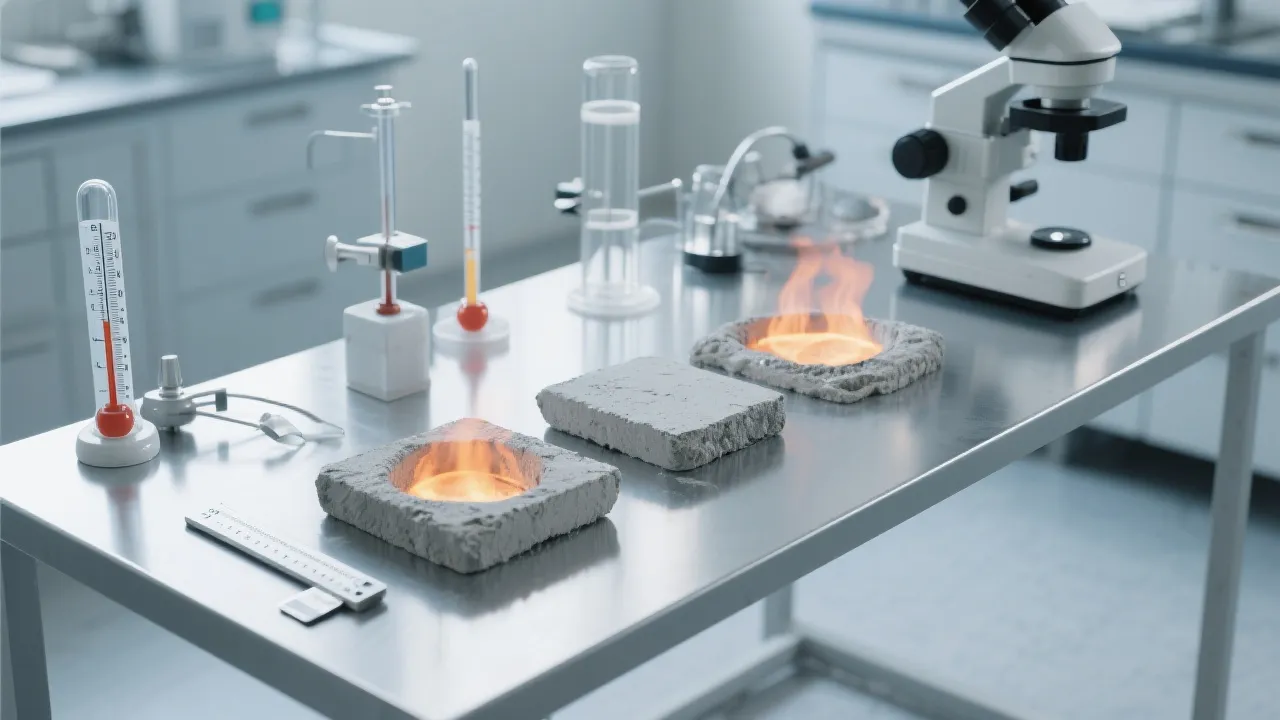
Critical for start/stop operations and burner zones. Look for controlled porosity, stable bonding phases, and proven thermal cycling data. In many industrial benchmarks, premium materials aim to survive 20–30+ water-quench cycles (test conditions vary).
Erosion & abrasion resistance
Key for cyclones, preheaters, burner quarl, and high-velocity gas paths. High bulk density and optimized grain sizing improve resistance. Typical dense high-alumina refractories often target > 2.5 g/cm³ bulk density for wear-sensitive zones.
Corrosion & slag resistance
Slag chemistry (basic/acidic), alkali vapors, and reducing atmospheres drive chemical wear. The “right” refractory is application-specific—often a balance of alumina, silica, magnesia, carbon, or special additives for penetration resistance.
One operational lesson seen across many plants: durability improves when installation and dry-out are treated as part of the material selection. Even a premium castable can lose performance if mixing water is off-spec, vibration is insufficient, or dry-out ramping is rushed. Suppliers who provide onsite guidance, standard work instructions, and dry-out curves reduce commissioning risk significantly.
Real-world decision shortcut: ask for a “wear map”
Request a zone list of your unit (hot face / backup / transition / slag line / burner throat), operating temperatures, atmosphere, slag/ash composition if available, and shutdown frequency. A qualified refractory partner can then propose a system design and provide supporting test data (e.g., RUL, PLC, bulk density, CCS, thermal shock cycles) aligned with recognized standards such as ISO/ASTM methods.

Indicator #3 — Manufacturing Quality & Consistency: The Hidden Variable Behind Stable Campaign Life
Two refractories can share a similar datasheet yet perform very differently. The gap often comes from manufacturing: raw material selection, batching accuracy, mixing uniformity, forming pressure, firing curve control, and QA sampling frequency. For procurement teams trying to reduce lifecycle cost, consistency is often more valuable than chasing the highest single test value.
Case example: scale + automation as a quality stabilizer
Zhengzhou Rongsheng Refractory Co., Ltd. is often referenced by buyers evaluating long-term supply stability. With an annual capacity of about 130,000 tons and modern automated production lines, the company emphasizes repeatability—precise batching, controlled firing, and standardized testing—so large industrial customers can run multi-site maintenance plans with fewer specification deviations.
Why it matters: tighter tolerances on density, porosity, and strength reduce “weak batches” that trigger early hot spots.
What buyers ask: COA per lot, QA frequency, traceability, and standard compliance documentation.
Implementation detail: consistent particle grading improves packing density, reducing penetration and erosion.
On the collaboration side, reputable refractory producers frequently work with third-party laboratories and inspection bodies for periodic verification, and align internal procedures with internationally recognized test methods. For global projects, buyers also value suppliers who can support documentation packages—material certificates, inspection reports, and installation guidelines—needed for EPC and plant compliance workflows.
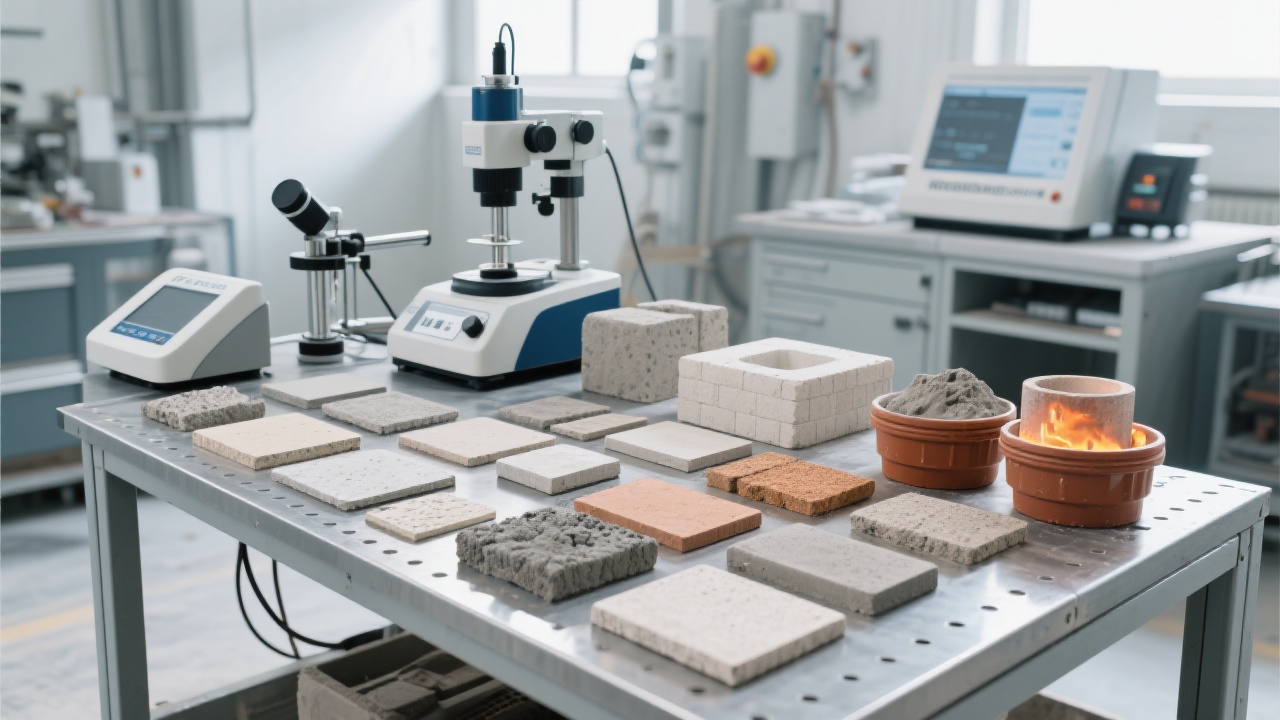
From “Single Product” to “System Solution”: What High-Performing Plants Do Differently
Across global high-temperature users, the best results usually come from combining material diversity with a system approach: dense bricks or castables for hot-face wear zones, lightweight insulation to cut heat loss, and specialized formulations where slag, alkali, or thermal cycling dominate. Plants that redesign linings based on operating reality often reduce refractory-related incidents and stabilize energy usage.
Field signals that your refractory selection needs an upgrade
- Frequent localized spalling after shutdowns or rapid temperature changes
- Hot spots appearing earlier than expected despite correct thickness
- Severe wear near burner impact or high-velocity dust-laden streams
- Slag/alkali penetration with “soft” surface or glazing effects
- Large batch-to-batch variation in installation workability or set behavior
In projects shared by refractory suppliers serving 2,000+ industrial customers worldwide, a recurring theme is that measurable gains often come from small engineering adjustments—optimizing a transition-zone grade, improving backup insulation, or refining dry-out schedules—rather than only switching to a more expensive chemistry. The decision becomes less about “buying a refractory” and more about buying operating stability.
Quick Buyer Checklist (Use This Before You Send an RFQ)
| What to provide |
Why suppliers need it |
What you should request back |
| Process temperature profile & hot-spot zones |
Defines RUL/creep requirements and safety margin |
Zone-based material proposal + test data (RUL, creep) |
| Atmosphere (oxidizing/reducing), dust/velocity |
Predicts erosion and chemical attack |
Erosion/abrasion references, recommended density/structure |
| Slag/ash chemistry (if available) |
Prevents mismatch between refractory chemistry and corrosives |
Slag resistance rationale + compatible product grades |
| Shutdown frequency & thermal cycling |
Thermal shock becomes dominant failure mode |
Thermal shock/cycling performance references + dry-out guidance |
| Installation method (brick, castable, gunning, precast) |
Affects workability, curing, and commissioning risk |
Work instructions, mixing ratios, curing & ramp-up schedule |
Questions Engineers and Buyers Commonly Ask (And Should Ask More Often)
“Which test standard are these values based on?”
A credible datasheet should clarify whether results follow ISO or ASTM methods and the exact test conditions. Without that, comparisons can be misleading.
“Can you provide COA and lot traceability?”
Batch-to-batch consistency is critical for multi-shift operations. COA per lot reduces uncertainty and simplifies QA acceptance.
“What installation and dry-out support is included?”
Many failures happen during commissioning. Practical support—mixing, vibration, curing, dry-out ramps—protects the material’s designed performance.
“Do you recommend a system solution, not a single grade?”
A high-performing lining is usually a combination of hot-face protection and heat-saving backup layers, tailored to each zone’s wear mechanism.
Have a specific furnace type or kiln zone in mind? Readers are encouraged to leave a comment with your operating temperature, atmosphere, and main wear symptom (spalling, erosion, slag attack). A targeted recommendation is always faster than generic product matching.
Need a Refractory Selection That’s Proven in High-Temperature Operation?
Request a zone-by-zone proposal for your kiln or furnace: recommended refractory bricks/castables, key test data, and installation guidance designed to reduce unplanned shutdowns and stabilize campaign life.