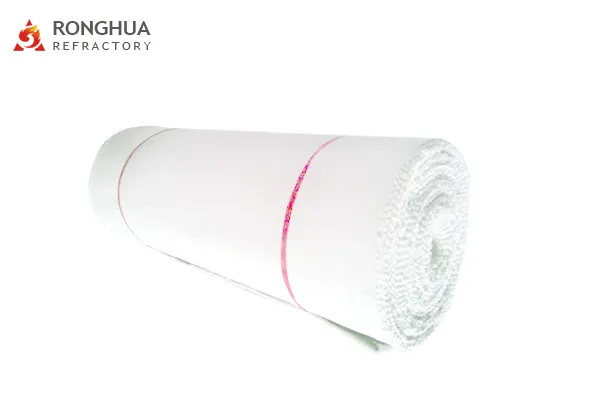
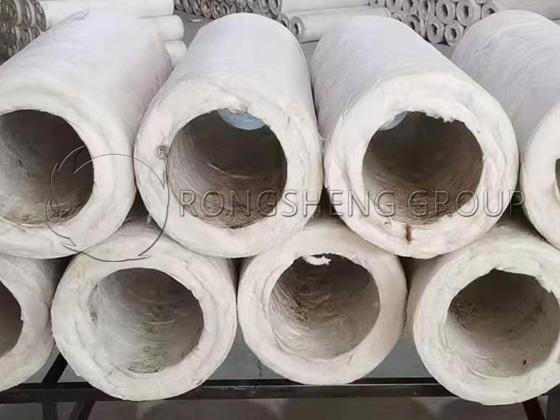
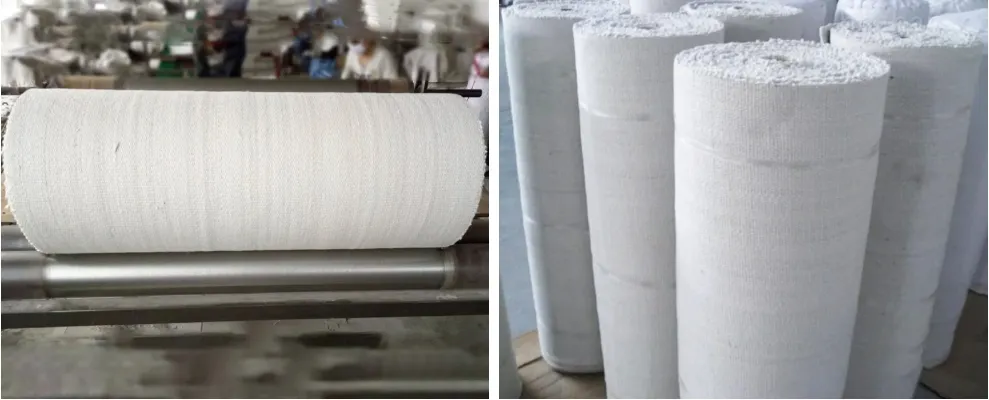
Why do 2,000+ industrial customers worldwide rely on Rongsheng Refractory ceramic fiber cloth for high-heat operations? Built with a lightweight structure, it delivers stable performance at 1000°C continuous service temperature and withstands up to 1260°C for short-term exposure. With low thermal conductivity for efficient insulation and strong resistance to corrosion in demanding environments, this high-temperature industrial fabric helps reduce heat loss, protect equipment, and support safer, more stable production. This article highlights the key advantages, practical benefits reported by users, and Rongsheng Refractory’s tailored solutions for different furnace, pipeline, and thermal protection applications—so engineers can quickly judge fit for their operating conditions.
In high-heat production lines, material choice is rarely a “nice-to-have.” It is a direct variable in downtime, energy loss, worker safety, and maintenance frequency. Rongsheng Refractory focuses on ceramic fiber cloth engineered for demanding thermal environments—lightweight construction, continuous service up to 1000°C, and short-term exposure up to 1260°C, paired with corrosion resistance and low thermal conductivity.
Buyer prompt: Is your current insulation fabric failing at seams, shedding fibers, or forcing frequent re-wrapping after shutdowns? If yes, the real cost is not the fabric—it’s the lost hours and wasted heat.
The Industrial Pain Point: Heat Is Not the Only Enemy
Many plants buy “heat-resistant fabric” assuming temperature rating is the only metric. In reality, failure often comes from a combination of thermal cycling, mechanical abrasion, chemical exposure, and installation constraints. A fabric that survives a peak temperature test may still crack, fray, or lose performance after repeated start-stop cycles.
Ceramic fiber cloth—especially zirconia-grade ceramic fiber reinforced with high-temperature alloy wire—is used in industrial insulation, removable covers, gaskets, curtains, and heat shields where consistent performance matters more than a one-time rating.
Four Core Advantages That Buyers Notice on the Production Floor
1) Lightweight Design That Makes Installation Faster
In maintenance windows, minutes count. Lightweight high-temperature insulation materials reduce handling fatigue and allow tighter wrapping on complex piping and equipment contours. Ceramic fiber cloth offers an efficient balance: strong enough for industrial wrapping and cover fabrication, while remaining flexible for field installation.
Practical question: Are your teams struggling to wrap elbows, valves, or irregular housings without bulky buildup?
2) Stable Under Extreme Temperature: 1000°C Continuous, 1260°C Short-Term
Rongsheng Refractory’s ceramic fiber cloth is designed for high-heat environments where continuous exposure can reach 1000°C, with short-term peaks up to 1260°C under controlled conditions. This matters in processes with temperature spikes during ignition, purging, or load changes.
Prevents early embrittlement and frequent replacement
Short-term peak
Up to 1260°C
Handles transient spikes during process swings
Reinforcement
High-temperature alloy wire
Improves dimensional stability and seam strength
Thermal performance
Low heat transfer (application-dependent)
Supports energy savings and surface temperature reduction
Note: Final performance depends on thickness, layering, airflow, mounting method, and actual duty cycle.
3) Corrosion Resistance for Chemical-Influenced Environments
High-temperature fabric failure is often accelerated by corrosive fumes, condensates, or process residues. Ceramic fiber cloth is valued as a corrosion-resistant fiber fabric option in many industrial settings—especially where the insulation layer faces intermittent chemical exposure.
Interactive check: Do you see staining, crusting, or stiffening on your existing wraps after only a few cycles?
4) Excellent Insulation & Electrical Properties Where It Matters
In industrial insulation materials, “insulation” is not only thermal. In many installations, ceramic fiber cloth is selected because it also supports stable performance in systems where electrical isolation and controlled heat transfer are required. This is particularly useful in fabricating removable insulation covers, protective sleeves, and barrier layers near heat sources.
Why This Choice Often Improves Efficiency and Lowers Total Operating Cost
Across global manufacturing, energy loss control has moved from “engineering improvement” to “financial discipline.” A well-designed high-temperature insulation layer can reduce surface heat loss, help stabilize process temperatures, and reduce the frequency of insulation rework. That is why over 2,000 industrial customers worldwide trust ceramic fiber cloth solutions for long-term use.
Data Point (Reference Scenario)
In a typical retrofit on high-temperature piping and valve zones (where insulation gaps are common), plants often report 8%–15% lower heat-related energy loss after improving insulation continuity and reducing hot spots. Actual results depend on baseline insulation condition, operating temperature, and enclosure design.
Customer Feedback (From the Field)
“We needed a fabric that could tolerate frequent thermal cycling. After switching to a reinforced ceramic fiber cloth, our team reduced re-wrapping frequency and kept surface heat more stable.”
The quiet advantage is operational: fewer unplanned touch-ups, easier inspections, and more consistent insulation coverage. Those improvements are hard to see on a purchase order—but very visible in weekly production meetings.
A Fit-Check: When Ceramic Fiber Cloth Is (and Isn’t) the Right Answer
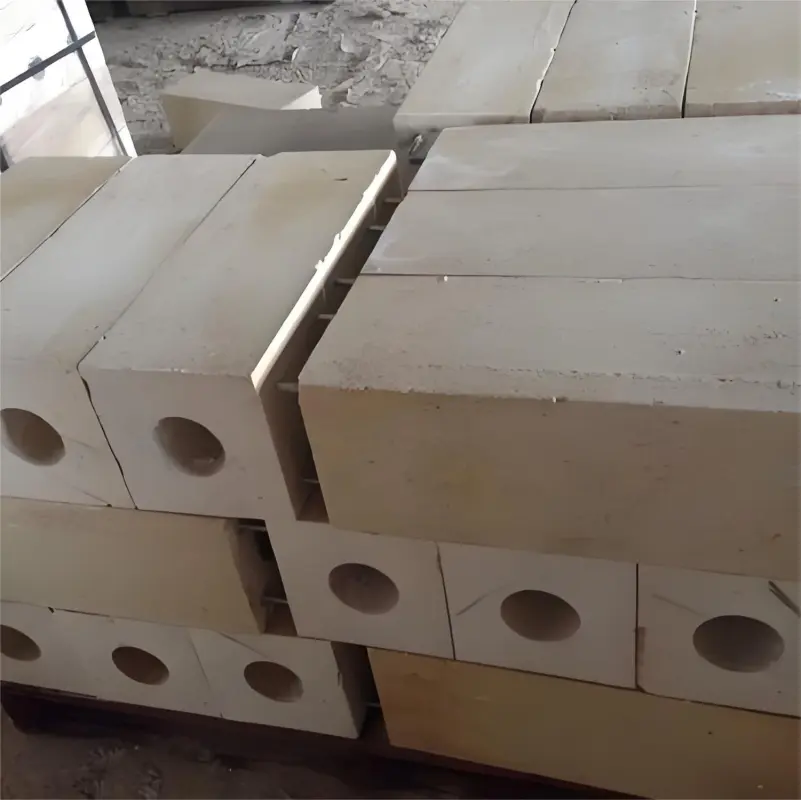
Ceramic fiber cloth is commonly used as a high-temperature environment solution for insulation and protection—especially when weight, flexibility, and heat stability are required. It is frequently selected for thermal wraps, furnace peripheral protection, sealing layers, expansion joints, and removable insulation covers.
However, responsible engineering requires a quick fit-check. If your application involves direct molten metal splash, intense mechanical cutting abrasion, or prolonged exposure beyond rated conditions, a layered system or alternative refractory construction may be needed.
Questions buyers ask before specifying: 1) What is the continuous vs. peak temperature at the fabric surface? 2) Is there exposure to chemicals, steam, or condensate? 3) Does the insulation need to be removable for inspection? 4) Do you need reinforcement (e.g., high-temperature alloy wire) for seam strength?
Made for Real Plants: Tailored Specifications, Not One-Size-Fits-All
Industrial buyers rarely succeed with generic specs copied from a catalog. Rongsheng Refractory supports a tailor-made solution mindset—matching fiber grade (including zirconia-grade ceramic fiber where applicable), reinforcement options, thickness, and finishing details to the duty cycle and installation method.
The goal is simple: ensure the ceramic fiber cloth performs in your exact operating reality—temperature profile, chemical influence, vibration, and maintenance rhythm—so you do not pay twice (once for the material, once for the rework).
Get Your Ceramic Fiber Cloth Specification Checked by Engineers
If you share your operating temperature range, exposure conditions, and installation photos/drawings, a suitable construction can be recommended faster—and with fewer surprises during commissioning.
What’s your application: removable insulation cover, pipe/valve wrap, furnace peripheral sealing, or thermal curtain? Leave a message with your temperature and process details.