In the demanding environment of a rotary cement kiln—where temperatures exceed 1400°C and chemical erosion is constant—refractory materials must perform under extreme stress. At Zhengzhou Rongsheng Refractories Co., Ltd., our direct-bonded magnesia-chrome bricks have been proven time and again to deliver superior durability, thermal shock resistance, and cost-efficiency across global cement plants.
One of our key clients—a major cement manufacturer in the Middle East—replaced their old chrome-magnesite bricks with our direct-bonded version in a 4.5-meter diameter kiln. Before installation, they experienced an average refractory life of just 12 months due to rapid spalling and hot face degradation. After switching to our product, the same kiln ran continuously for 28 months without any lining replacement—extending service life by over 130%.
The client reported a 32% reduction in maintenance downtime and a 27% decrease in overall refractory costs per ton of clinker produced. These results were verified through monthly temperature mapping and post-use microstructural analysis conducted by independent third-party labs.
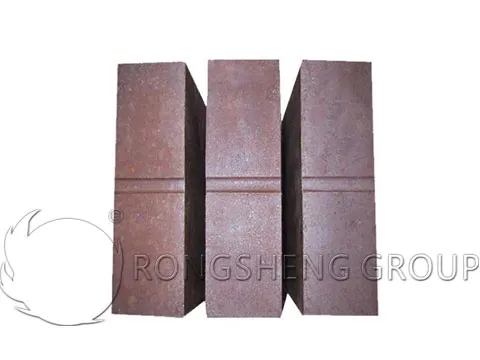
Unlike conventional magnesia-chrome bricks, our direct-bonded formulation features ultra-high-density grain-to-grain bonding achieved through optimized sintering at 1650°C. This creates a dense microstructure that resists penetration from alkali vapors (Na₂O, K₂O) and sulfur compounds commonly found in cement kiln flue gas.
Field tests show our bricks maintain structural integrity after 50+ thermal cycles between 1200°C and 1450°C—far exceeding the industry standard of 30 cycles. This means fewer cracks, less spalling, and longer operational runs even during start-up and shutdown procedures.
Dr. Ahmed El-Sayed, Senior Refractory Engineer at the International Cement Association (ICA), states:
“Direct-bonded magnesia-chrome bricks are not just another refractory option—they’re a strategic investment. When properly installed and maintained, they offer measurable ROI through reduced downtime and consistent kiln performance.”
This aligns with feedback from plant managers worldwide who now prioritize this technology for new installations and retrofits alike.
Whether you're planning a rebuild or looking to extend your current lining cycle, our team can help tailor a solution based on your specific kiln conditions and production goals.
Get a Customized Refractory Assessment Today*Data based on real-world case studies from clients in GCC, Southeast Asia, and Eastern Europe. Individual results may vary depending on operating parameters and maintenance practices.
 75
|
75
|
 high temperature cement
refractory material innovation
thermal shock resistance
mechanical strength in refractories
custom refractory solutions
483
|
wear-resistant castable
high-temperature refractory material
refractory lining durability
steel plant refractory solutions
industrial furnace lining protection
304
|
High - purity zirconium powder
Refractory materials
Ceramic production upgrade
Customized zirconium powder particle size
Global supply chain support
164
|
high alumina fireclay checker bricks
refractory material export
high-temperature kiln components
checker brick performance advantages
industrial refractory suppliers
402
|
Rongsheng High Conductivity Magnesium-Chrome Bricks
Refractory Bricks for Steel Manufacturing
High-Temperature Stable Refractory Bricks
high temperature cement
refractory material innovation
thermal shock resistance
mechanical strength in refractories
custom refractory solutions
483
|
wear-resistant castable
high-temperature refractory material
refractory lining durability
steel plant refractory solutions
industrial furnace lining protection
304
|
High - purity zirconium powder
Refractory materials
Ceramic production upgrade
Customized zirconium powder particle size
Global supply chain support
164
|
high alumina fireclay checker bricks
refractory material export
high-temperature kiln components
checker brick performance advantages
industrial refractory suppliers
402
|
Rongsheng High Conductivity Magnesium-Chrome Bricks
Refractory Bricks for Steel Manufacturing
High-Temperature Stable Refractory Bricks